In today’s ever-shifting data landscape—where explosive data growth collides with relentless AI innovation—traditional orchestration methods must continuously adapt, evolve, and expand. Keeping up with these changes is akin to chasing after a hyperactive puppy: thrilling, exhausting, and unpredictably rewarding.
New demands breed new solutions. Modern data teams require orchestration tools that are agile, scalable, and adept at handling complexity with ease. In this guide, we’ll dive deep into some of the most popular orchestration platforms, exploring their strengths, quirks, and practical applications. We’ll cover traditional powerhouses like Apache Airflow, NiFi, Prefect, and Dagster, along with ambitious newcomers such as n8n, Mage, and Flowise. Let’s find your ideal orchestration companion.
Orchestration Ideologies: Why Philosophy Matters
At their core, orchestration tools embody distinct philosophies about data management. Understanding these ideologies is crucial—it’s the difference between a smooth symphony and chaotic noise.
Pipelines-as-Code: Prioritizes flexibility, maintainability, and automation. This approach empowers developers with robust version control, repeatability, and scalable workflows (Airflow, Prefect, Dagster). However, rapid prototyping can be challenging due to initial setup complexities.
Visual Workflow Builders: Emphasizes simplicity, accessibility, and rapid onboarding. Ideal for diverse teams that value speed over complexity (NiFi, n8n, Flowise). Yet, extensive customization can be limited, making intricate workflows harder to maintain.
Data as a First-class Citizen: Places data governance, quality, and lineage front and center, crucial for compliance and audit-ready pipelines (Dagster).
Rapid Prototyping and Development: Enables quick iterations, allowing teams to swiftly respond to evolving requirements, perfect for exploratory and agile workflows (n8n, Mage, Flowise).
Whether your priority is precision, agility, governance, or speed, the right ideology ensures your orchestration tool perfectly aligns with your team’s DNA.
NiFi, a visually intuitive, low-code platform, excels at real-time data ingestion, particularly in IoT contexts. Its visual approach means rapid setup and easy monitoring, though complex logic can quickly become tangled. With built-in processors and extensive monitoring tools, NiFi significantly lowers the entry barrier for non-developers, making it a go-to choice for quick wins.
Yet, customization can become restrictive, like painting with a limited palette; beautiful at first glance, frustratingly limited for nuanced details.
🔥 Strengths
🚩 Weaknesses
Real-time capabilities, intuitive UI
Complex logic becomes challenging
Robust built-in monitoring
Limited CI/CD, moderate scalability
Easy to learn, accessible
Customization restrictions
Best fit: Real-time streaming, IoT integration, moderate-scale data collection.
Airflow is the reliable giant in data orchestration. Python-based DAGs ensure clarity in complex ETL tasks. It’s highly scalable and offers robust CI/CD practices, though beginners might find it initially overwhelming. Its large community and extensive ecosystem provide solid backing, though real-time demands can leave it breathless.
Airflow is akin to assembling IKEA furniture; clear instructions, but somehow extra screws always remain.
🔥 Strengths
🚩 Weaknesses
Exceptional scalability and community
Steep learning curve
Powerful CI/CD integration
Limited real-time processing
Mature ecosystem and broad adoption
Difficult rapid prototyping
Best fit: Large-scale batch processing, complex ETL operations.
Prefect combines flexibility, observability, and Pythonic elegance into a robust, cloud-native platform. It simplifies debugging and offers smooth CI/CD integration but can pose compatibility issues during significant updates. Prefect also introduces intelligent scheduling and error handling that enhances reliability significantly.
Think of Prefect as your trustworthy friend who remembers your birthday but occasionally forgets their wallet at dinner.
🔥 Strengths
🚩 Weaknesses
Excellent scalability and dynamic flows
Compatibility disruptions on updates
Seamless integration with CI/CD
Slight learning curve for beginners
Strong observability
Difficulties in rapid prototyping
Best fit: Dynamic workflows, ML pipelines, cloud-native deployments.
Dagster stands out by emphasizing data governance, lineage, and quality. Perfect for compliance-heavy environments, though initial setup complexity may deter newcomers. Its modular architecture makes debugging and collaboration straightforward, but rapid experimentation often feels sluggish.
Dagster is the colleague who labels every lunch container—a bit obsessive, but always impeccably organized.
🔥 Strengths
🚩 Weaknesses
Robust governance and data lineage
Initial setup complexity
Strong CI/CD support
Smaller community than Airflow
Excellent scalability and reliability
Challenging rapid prototyping
Best fit: Governance-heavy environments, data lineage tracking, compliance-focused workflows.
n8n provides visual, drag-and-drop automation, ideal for quick prototypes and cross-team collaboration. Yet, complex customization and large-scale operations can pose challenges. Ideal for scenarios where rapid results outweigh long-term complexity, n8n is highly accessible to non-developers.
Using n8n is like instant coffee—perfect when speed matters more than artisan quality.
🔥 Strengths
🚩 Weaknesses
Intuitive and fast setup
Limited scalability
Great for small integrations
Restricted customization
Easy cross-team usage
Basic versioning and CI/CD
Best fit: Small-scale prototyping, quick API integrations, cross-team projects.
Mage smoothly transforms Python notebooks into production-ready pipelines, making it a dream for data scientists who iterate frequently. Its notebook-based structure supports collaboration and transparency, yet traditional data engineering scenarios may stretch its capabilities.
Mage is the rare notebook that graduates from “works on my machine” to “works everywhere.”
🔥 Strengths
🚩 Weaknesses
Ideal for ML experimentation
Limited scalability for heavy production
Good version control, CI/CD support
Less suited to traditional data engineering
Iterative experimentation friendly
Best fit: Data science and ML iterative workflows.
Flowise offers intuitive visual workflows designed specifically for AI-driven applications like chatbots. Limited scalability, but unmatched in rapid AI development. Its no-code interface reduces dependency on technical teams, empowering broader organizational experimentation.
Flowise lets your marketing team confidently create chatbots—much to engineering’s quiet dismay.
🔥 Strengths
🚩 Weaknesses
Intuitive AI prototyping
Limited scalability
Fast chatbot creation
Basic CI/CD, limited customization
Best fit: Chatbots, rapid AI-driven applications.
Comparative Quick-Reference 📊
Tool
Ideology
Scalability 📈
CI/CD 🔄
Monitoring 🔍
Language 🖥️
Best For 🛠️
NiFi
Visual
Medium
Basic
Good
GUI
Real-time, IoT
Airflow
Code-first
High
Excellent
Excellent
Python
Batch ETL
Prefect
Code-first
High
Excellent
Excellent
Python
ML pipelines
Dagster
Data-centric
High
Excellent
Excellent
Python
Governance
n8n
Rapid Prototyping
Medium-low
Basic
Good
JavaScript
Quick APIs
Mage
Rapid AI Prototyping
Medium
Good
Good
Python
ML workflows
Flowise
Visual AI-centric
Low
Basic
Basic
GUI, YAML
AI chatbots
Final Thoughts 🎯
Choosing an orchestration tool isn’t about finding a silver bullet—it’s about aligning your needs with the tool’s strengths. Complex ETL? Airflow. Real-time? NiFi. Fast AI prototyping? Mage or Flowise.
The orchestration landscape is vibrant and ever-changing. Embrace new innovations, but don’t underestimate proven solutions. Which orchestration platform has made your life easier lately? Share your story—we’re eager to listen!
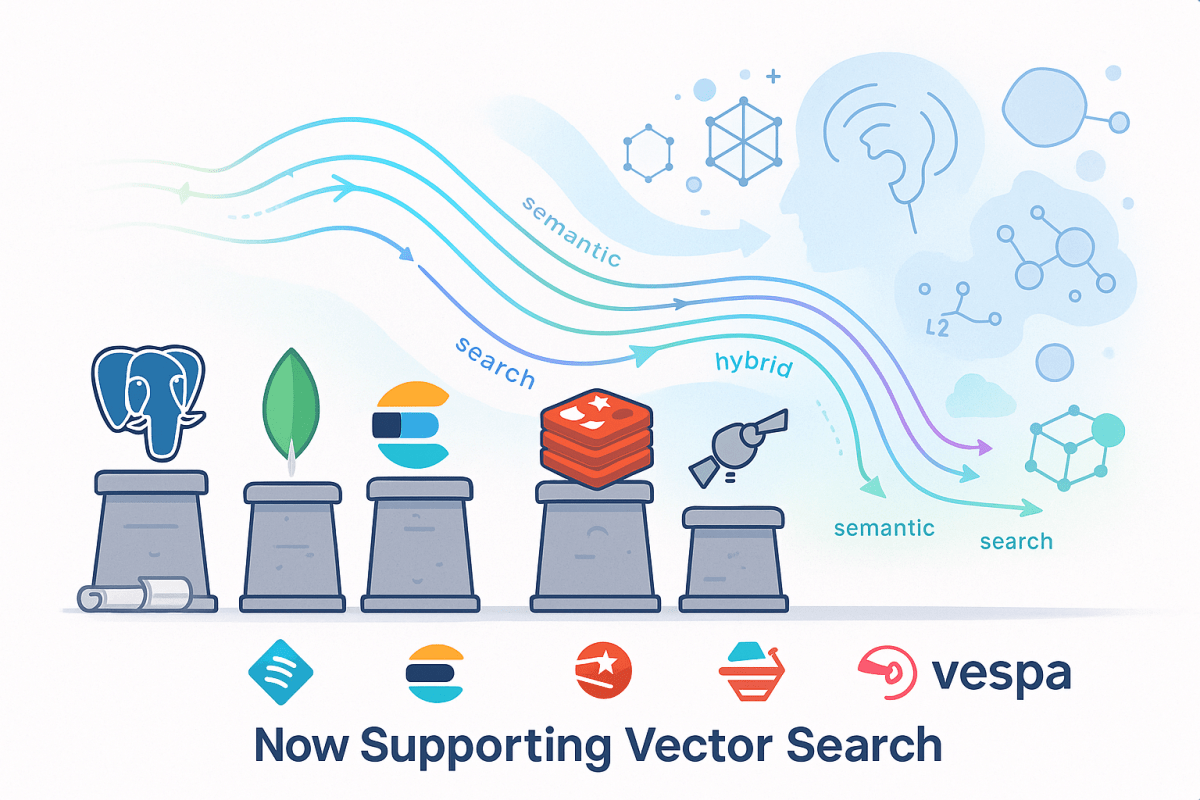
As artificial intelligence and large language models redefine how we work with data, a new class of database capabilities is gaining traction: vector search. In our previous post, we explored specialized vector databases like Pinecone, Weaviate, Qdrant, and Milvus — purpose-built to handle high-speed, large-scale similarity search. But what about teams already committed to traditional databases?
The truth is, you don’t have to rebuild your stack to start benefiting from vector capabilities. Many mainstream database vendors have introduced support for vectors, offering ways to integrate semantic search, hybrid retrieval, and AI-powered features directly into your existing data ecosystem.
This post is your guide to understanding how traditional databases are evolving to meet the needs of semantic search — and how they stack up against their vector-native counterparts.
Why Traditional Databases Matter in the Vector Era
Specialized tools may offer state-of-the-art performance, but traditional databases bring something equally valuable: maturity, integration, and trust. For organizations with existing investments in PostgreSQL, MongoDB, Elasticsearch, Redis, or Vespa, the ability to add vector capabilities without replatforming is a major win.
These systems enable hybrid queries, mixing structured filters and semantic search, and are often easier to secure, audit, and scale within corporate environments.
Let’s look at each of them in detail — not just the features, but how they feel to work with, where they shine, and what you need to watch out for.
The pgvector extension brings vector types and similarity search into the core of PostgreSQL. It’s the fastest path to experimenting with semantic search in SQL-native environments.
Vector fields up to 16k dimensions
Cosine, L2, and dot product similarity
GIN and IVFFlat indexing (HNSW via 3rd-party)
SQL joins and hybrid queries supported
AI-enhanced dashboards and BI
Internal RAG pipelines
Private deployments in sensitive industries
Great for small-to-medium workloads. With indexing, it’s usable for production — but not tuned for web-scale.
Advantages
Weaknesses
Familiar SQL workflow
Slower than vector-native DBs
Secure and compliance-ready
Indexing options are limited
Combines relational + semantic data
Requires manual tuning
Open source and widely supported
Not ideal for streaming data
Thoughts: If you already run PostgreSQL, pgvector is a no-regret move. Just don’t expect deep vector tuning or billion-record speed.
Elasticsearch, the king of full-text search, now supports vector similarity with the KNN plugin. It’s a hybrid powerhouse when keyword relevance and embeddings combine.
ANN search using HNSW
Multi-modal queries (text + vector)
Built-in scoring customization
E-commerce recommendations
Hybrid document search
Knowledge base retrieval bots
Performs well at enterprise scale with the right tuning. Latency is higher than vector-native tools, but hybrid precision is hard to beat.
Advantages
Weaknesses
Text + vector search in one place
HNSW-only method
Proven scalability and monitoring
Java heap tuning can be tricky
Custom scoring and filters
Not optimized for dense-only queries
Thoughts: If you already use Elasticsearch, vector search is a logical next step. Not a pure vector engine, but extremely versatile.
Vespa is a full-scale engine built for enterprise search and recommendations. With native support for dense and sparse vectors, it’s a heavyweight in the semantic search space.
Dense/sparse hybrid support
Advanced filtering and ranking
Online learning and relevance tuning
Media or news personalization
Context-rich enterprise search
Custom search engines with ranking logic
One of the most scalable traditional engines, capable of handling massive corpora and concurrent users with ease.
Advantages
Weaknesses
Built for extreme scale
Steeper learning curve
Sophisticated ranking control
Deployment more complex
Hybrid vector + metadata + rules
Smaller developer community
Thoughts: Vespa is an engineer’s dream for large, complex search problems. Best suited to teams who can invest in custom tuning.
Summary: Which Path Is Right for You?
Database
Best For
Scale Suitability
PostgreSQL
Existing analytics, dashboards
Small to medium
MongoDB
NoSQL apps, fast product prototyping
Medium
Elasticsearch
Hybrid search and e-commerce
Medium to large
Redis
Real-time personalization and chat
Small to medium
Vespa
News/media search, large data workloads
Enterprise-scale
Final Reflections
Traditional databases may not have been designed with semantic search in mind — but they’re catching up fast. For many teams, they offer the best of both worlds: modern AI capability and a trusted operational base.
As you plan your next AI-powered feature, don’t overlook the infrastructure you already know. With the right extensions, traditional databases might surprise you.
In our next post, we’ll explore real-world architectures combining these tools, and look at performance benchmarks from independent tests.
Stay tuned — and if you’ve already tried adding vector support to your favorite DB, we’d love to hear what worked (and what didn’t).
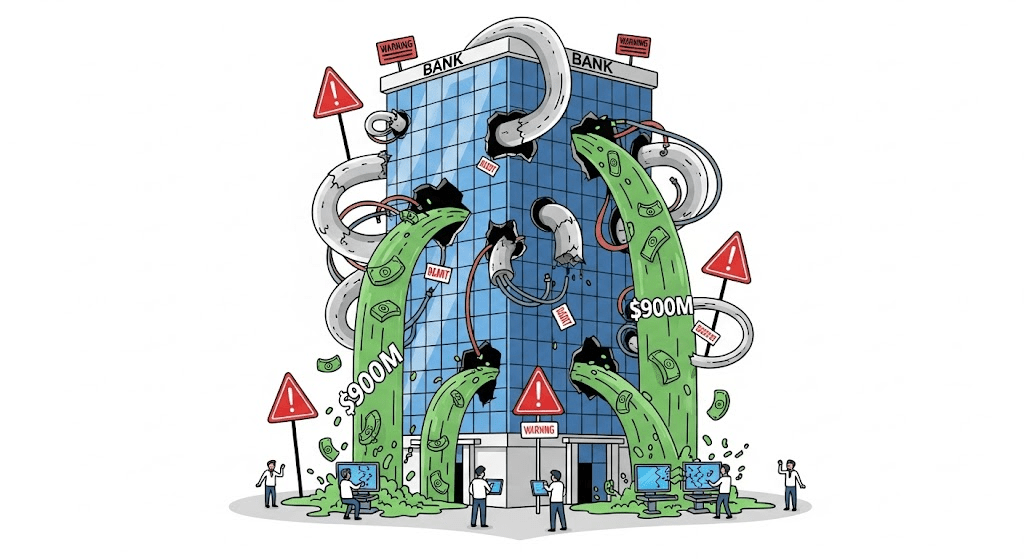
When Titans Stumble: The $900 Million Data Mistake 🏦💥
Picture this: One of the world’s largest banks accidentally wires out $900 million. Not because of a cyber attack. Not because of fraud. But because their data systems were so confusing that even their own employees couldn’t navigate them properly.
This isn’t fiction. This happened to Citigroup in 2020. 😱
Here’s the thing about data today: everyone knows it’s valuable. CEOs call it “the new oil.” 🛢️ Boards approve massive budgets for analytics platforms. Companies hire armies of data scientists. The promise is irresistible—master your data, and you master your market.
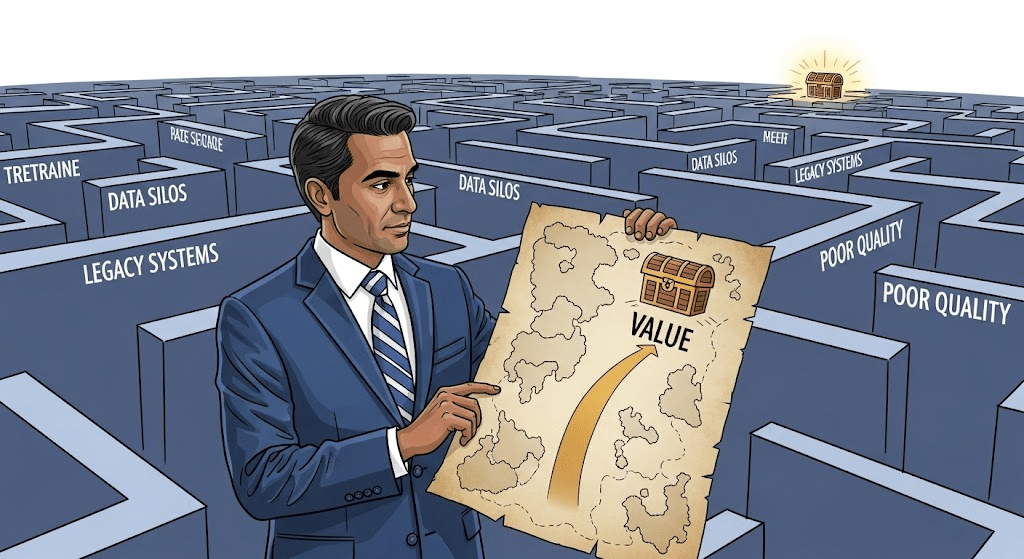
But here’s what’s rarely discussed: the gap between knowing data is valuable and actually extracting that value is vast, treacherous, and littered with the wreckage of well-intentioned initiatives.
Citigroup should have been the last place for a data disaster. This is a financial titan operating in over 100 countries, managing trillions in assets, employing hundreds of thousands of people. If anyone understands that data is mission-critical—for risk management, regulatory compliance, customer insights—it’s a global bank. Their entire business model depends on the precise flow of information.
Yet over the past decade, Citi has paid over $1.5 billion in regulatory fines, largely due to how poorly they managed their data. The $400 million penalty in 2020 specifically cited “inadequate data quality management.” CEO Jane Fraser was blunt about the root cause: “an absence of enforced enterprise-wide standards and governance… a siloed organization… fragmented tech platforms and manual processes.”
The problems were surprisingly basic for such a sophisticated institution:
🔍 They lacked a unified way to catalog their data—imagine trying to find a specific document in a library with no card catalog system
👥 They had no effective Master Data Management, meaning the same customer might appear differently across various systems
⚠️ Their data quality tools were insufficient, allowing errors to multiply and spread
The $900 million wiring mistake? That was just the most visible symptom. Behind the scenes, opening a simple wealth management account took three times longer than industry standards because employees had to manually piece together customer information from multiple, disconnected systems. Cross-selling opportunities evaporated because customer data lived in isolated silos.
Since 2021, Citi has invested over $7 billion trying to fix these fundamental data problems—hiring a Chief Data Officer, implementing enterprise data governance, consolidating systems. They’re essentially rebuilding their data foundation while the business keeps running.
Citi’s story reveals an uncomfortable truth: recognizing data’s value is easy. Actually capturing that value? That’s where even titans stumble. The tools, processes, and thinking required to govern data effectively are fundamentally different from traditional IT management. And when organizations try to manage their most valuable asset with yesterday’s approaches, expensive mistakes become inevitable.
So why, in an age of unprecedented data abundance, does true data value remain so elusive? 🤔
The “New Oil” That Clogs the Engine ⛽🚫
The “data is the new oil” metaphor has become business gospel. And like oil, data holds immense potential energy—the power to fuel innovation, drive efficiency, and create competitive advantage. But here’s where the metaphor gets uncomfortable: crude oil straight from the ground is useless. It needs refinement, processing, and careful handling. Miss any of these steps, and your valuable resource becomes a liability.
Toyota’s $350M Storage Overflow 🏭💾
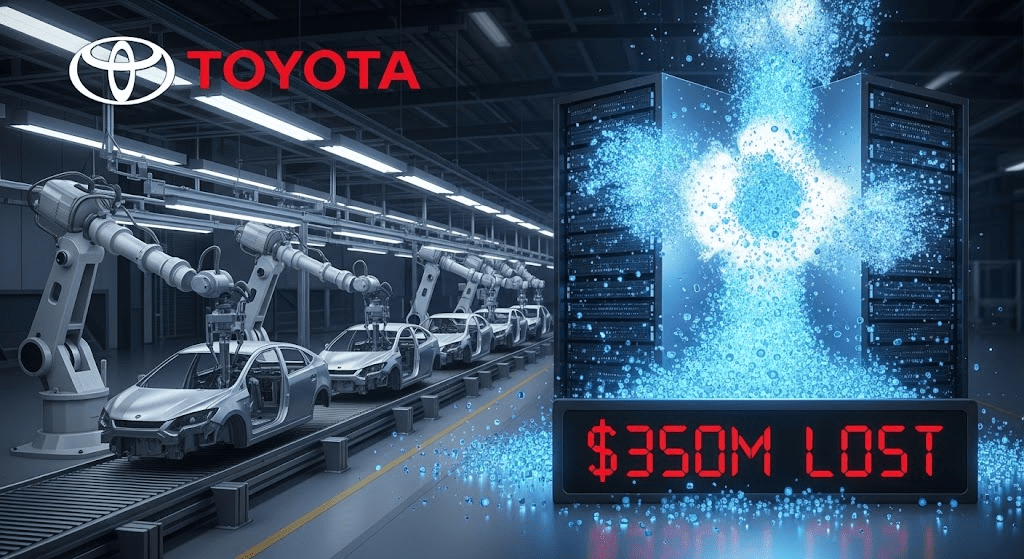
Consider Toyota, the undisputed master of manufacturing efficiency. Their “just-in-time” production system is studied in business schools worldwide. If anyone knows how to manage resources precisely, it’s Toyota. Yet in August 2023, all 14 of their Japanese assembly plants—responsible for a third of their global output—ground to a complete halt.
Not because of a parts shortage or supply chain disruption, but because their servers ran out of storage space for parts ordering data. 🤯
Think about that for a moment. Toyota’s production lines, the engines of their enterprise, stopped not from a lack of physical components, but because their digital “storage tanks” for vital parts data overflowed. The valuable data was there, abundant even, but its unmanaged volume choked the system. What should have been a strategic asset became an operational bottleneck, costing an estimated $350 million in lost production for a single day.
The Excel Pandemic Response Disaster 📊🦠
Or picture this scene from the height of the COVID-19 pandemic: Public Health England, tasked with tracking virus spread to save lives, was using Microsoft Excel to process critical test results. Not a modern data platform, not a purpose-built system—Excel.
When positive cases exceeded the software’s row limit (a quaint 65,536 rows in the old format they were using), nearly 16,000 positive cases simply vanished into the digital ether. The “refinery” for life-saving data turned out to be a leaky spreadsheet, and thousands of vital records evaporated past an arbitrary digital limit.
These aren’t stories of companies that didn’t understand data’s value. Toyota revolutionized manufacturing through data-driven processes. Public Health England was desperately trying to harness data to fight a pandemic. Both organizations recognized the strategic importance of their information assets. But recognition isn’t realization.
The Sobering Statistics 📈📉
The numbers tell a sobering story:
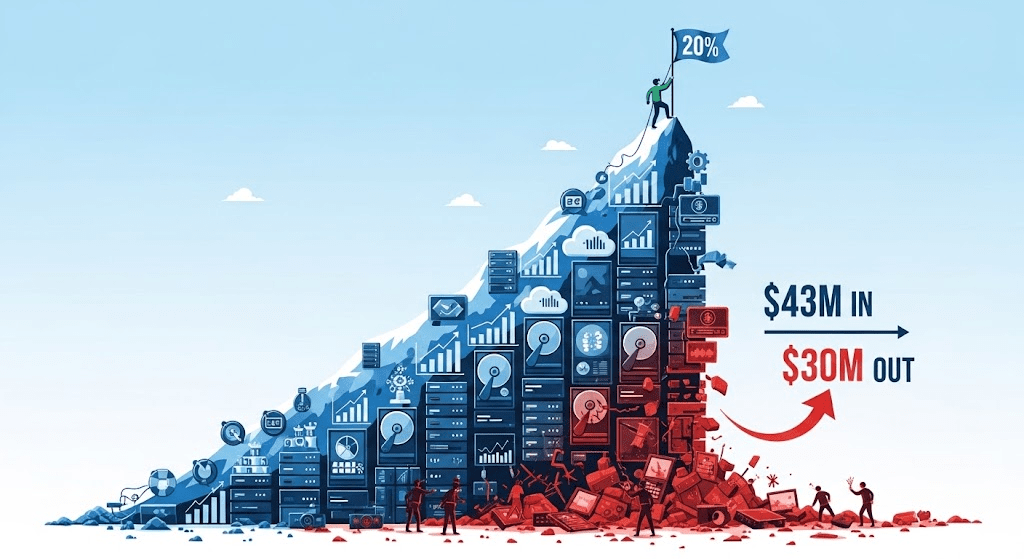
Despite exponential growth in data volumes—projected to reach 175 zettabytes by 2025—only 20% of data and analytics solutions actually deliver business outcomes
Organizations with low-impact data strategies see an average investment of 43millionyieldjust yield just $30 million in returns
They’re literally losing money on their most valuable asset 💸
The problem isn’t the oil—it’s the refinement process. And that’s where most organizations, even the most sophisticated ones, are getting stuck.
The Symptoms: When Data Assets Become Data Liabilities 🚨
If you’ve worked in any data-driven organization, these scenarios will feel painfully familiar:
🗣️ The Monday Morning Meeting Meltdown
Marketing bursts in celebrating “record engagement” based on their dashboard. Sales counters with “stagnant conversions” from their system. Finance presents “flat growth” from yet another source. Three departments, three “truths,” one confused leadership team.
The potential for unified strategic insight drowns in a fog of conflicting data stories. According to recent surveys, 72% of executives cite this kind of cultural barrier—including lack of trust in data—as the primary obstacle to becoming truly data-driven.
🤖 The AI Project That Learned All the Wrong Lessons
Remember that multi-million dollar AI initiative designed to revolutionize customer understanding? The one that now recommends winter coats to customers in Miami and suggests dog food to cat owners? 🐕🐱
The “intelligent engine” sputters along, starved of clean, reliable data fuel. Unity Technologies learned this lesson the hard way when bad data from a large customer corrupted their machine learning algorithms, costing them $110 million in 2022. Their CEO called it “self-inflicted”—a candid admission that the problem wasn’t the technology, but the data feeding it.
📋 The Compliance Fire Drill
It’s audit season again. Instead of confidently demonstrating well-managed data assets, teams scramble to piece together data lineage that should be readily available. What should be a routine verification of good governance becomes a costly, reactive fire drill. The value of trust and transparency gets overshadowed by the fear of what auditors might find in the data chaos.
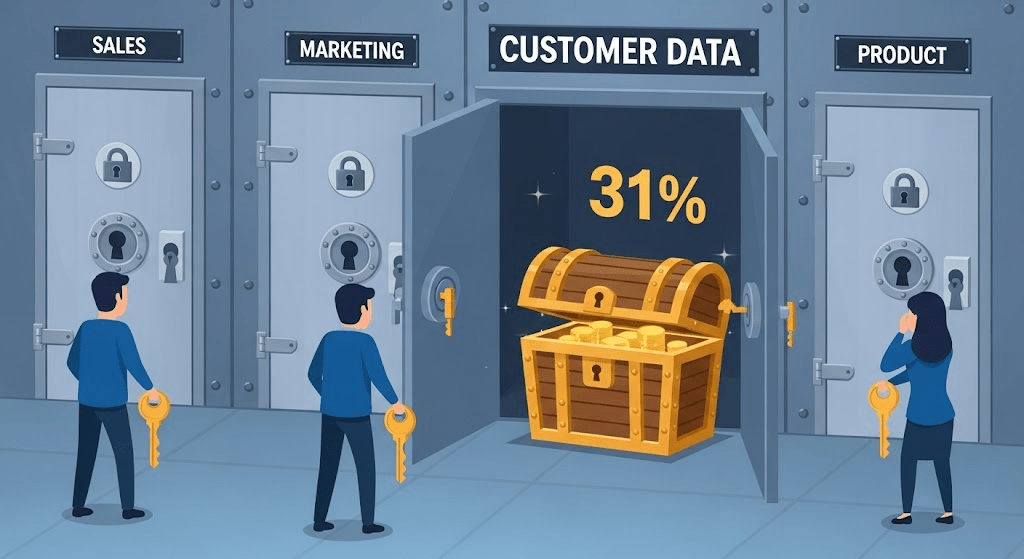
💎 The Goldmine That Nobody Can Access
Your organization sits on a treasure trove of customer data—purchase history, preferences, interactions, feedback. But it’s scattered across departmental silos like a jigsaw puzzle with pieces locked in different rooms.
The sales team can’t see the full customer journey 🛤️
Marketing can’t personalize effectively 🎯
Product development misses crucial usage patterns 📱
Only 31% of companies have achieved widespread data accessibility, meaning the majority are sitting on untapped goldmines.
⏰ The Data Preparation Time Sink
Your highly skilled data scientists—the ones you recruited from top universities and pay premium salaries—spend 62% of their time not building sophisticated models or generating insights, but cleaning and preparing data.
It’s like hiring a master chef and having them spend most of their time washing dishes. 👨🍳🍽️ The opportunity cost is staggering: brilliant minds focused on data janitorial work instead of value creation.
The Bottom Line 📊
These aren’t isolated incidents. They’re symptoms of a systemic problem: organizations that recognize data’s strategic value but lack the specialized approaches needed to extract it. The result? Data becomes a source of frustration rather than competitive advantage, a cost center rather than a profit driver.
The most telling statistic? Despite all the investment in data initiatives, over 60% of executives don’t believe their companies are truly data-driven. They’re drowning in information but starving for insight. 🌊📊
Why Yesterday’s Playbook Fails Tomorrow’s Data 📚❌
Here’s where many organizations go wrong: they try to manage their most valuable and complex asset using the same approaches that work for everything else. It’s like trying to conduct a symphony orchestra with a traffic warden’s whistle—the potential for harmony exists, but the tools are fundamentally mismatched. 🎼🚦
Traditional IT governance excels at managing predictable, structured systems. Deploy software, follow change management protocols, monitor performance, patch as needed. These approaches work brilliantly for email servers, accounting systems, and corporate websites.
But data is different. It’s dynamic, interconnected, and has a lifecycle that spans creation, transformation, analysis, archival, and deletion. It flows across systems, changes meaning in different contexts, and its quality can degrade in ways that aren’t immediately visible.
The Knight Capital Catastrophe ⚔️💥
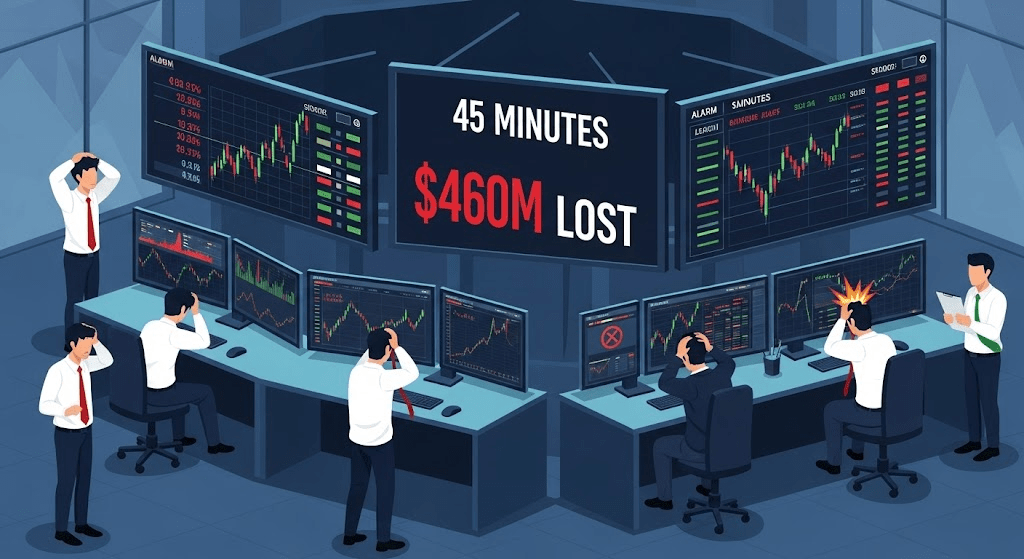
Consider Knight Capital, a sophisticated financial firm that dominated high-frequency trading. They had cutting-edge technology and rigorous software development practices. Yet in 2012, a routine software deployment—the kind they’d done countless times—triggered a catastrophic failure.
Their trading algorithms went haywire, executing millions of erroneous trades in 45 minutes and losing $460 million. The company was essentially destroyed overnight.
What went wrong? Their standard software deployment process failed to account for data-specific risks:
🔄 Old code that handled trading data differently was accidentally reactivated
🧪 Their testing procedures, designed for typical software changes, missed the unique ways this change would interact with live market data
⚡ Their risk management systems, built for normal trading scenarios, couldn’t react fast enough to data-driven chaos
Knight Capital’s story illustrates a crucial point: even world-class general IT practices can be dangerously inadequate when applied to data-intensive systems. The company had excellent software engineers, robust development processes, and sophisticated technology. What they lacked were data-specific safeguards—the specialized approaches needed to manage systems where data errors can cascade into business catastrophe within minutes.
The Pattern Repeats 🔄
This pattern repeats across industries. Equifax, a company whose entire business model depends on data accuracy, suffered coding errors in 2022 that generated incorrect credit scores for hundreds of thousands of consumers. Their general IT change management processes failed to catch problems that were specifically related to how data flowed through their scoring algorithms.
Data’s Unique Challenges 🎯
The fundamental issue is that data has unique characteristics that generic approaches simply can’t address:
📊 Volume and Velocity: Data systems must handle massive scale and real-time processing that traditional IT rarely encounters
🔀 Variety and Complexity: Data comes in countless formats and structures, requiring specialized integration approaches
✅ Quality and Lineage: Unlike other IT assets, data quality can degrade silently, and understanding where data comes from becomes critical for trust
⚖️ Regulatory and Privacy Requirements: Data governance involves compliance challenges that don’t exist for typical IT systems
Trying to govern today’s dynamic data ecosystems with yesterday’s generic project plans is like navigating a modern metropolis with a medieval map—you’re bound to get lost, and the consequences can be expensive. 🗺️🏙️
The solution isn’t to abandon proven IT practices, but to extend them with data-specific expertise. Organizations need approaches that understand data’s unique nature and can govern it as the strategic asset it truly is.
The Specialized Data Lens: From Deluge to Dividend 🔍💰
So how do organizations bridge this gap between data’s promise and its realization? The answer lies in what we call the “specialized data lens”—a fundamentally different way of thinking about and managing data that recognizes its unique characteristics and requirements.
This isn’t about abandoning everything you know about IT and business management. It’s about extending those proven practices with data-specific approaches that can finally unlock the value sitting dormant in your organization’s information assets.
The Two-Pronged Approach 🔱
The specialized data lens operates on two complementary levels:
🛠️ Data-Specific Tools and Architectures for Value Extraction
Just as you wouldn’t use a screwdriver to perform surgery, you can’t manage modern data ecosystems with generic tools. Organizations need purpose-built solutions:
Data catalogs that make information discoverable and trustworthy
Master data management systems that create single sources of truth
Data quality frameworks that prevent the “garbage in, garbage out” problem
Modern architectural patterns like data lakehouses and data fabrics that can handle today’s volume, variety, and velocity requirements
→ In our next post, we’ll dive deep into these specialized tools and show you exactly how they work in practice.
📋 Data-Centric Processes and Governance for Value Realization
Even the best tools are useless without the right processes. This means:
Data stewardship programs that assign clear ownership and accountability
Quality frameworks that catch problems before they cascade
Proven methodologies like DMBOK (Data Management Body of Knowledge) that provide structured approaches to data governance
Embedding data thinking into every business process, not treating it as an IT afterthought
→ Our third post will explore these governance frameworks and show you how to implement them effectively.
What’s Coming Next 🚀
In this series, we’ll explore:
🔧 The Specialized Toolkit – Deep dive into data-specific tools and architectures that actually work
👥 Mastering Data Governance – Practical frameworks for implementing effective data governance without bureaucracy
📈 Measuring Success – How to prove ROI and build sustainable data programs
🎯 Industry Applications – Real-world case studies across different sectors
The Choice Is Yours ⚡
Here’s the truth: the data paradox isn’t inevitable. Organizations that adopt specialized approaches to data management don’t just survive the complexity—they thrive because of it. They turn their data assets into competitive advantages, their information into insights, and their digital exhaust into strategic fuel.
The question isn’t whether your organization will eventually need to master data governance. The question is whether you’ll do it proactively, learning from others’ expensive mistakes, or reactively, after your own $900 million moment.
What’s your data story? Share your experiences with data challenges in the comments below—we’d love to hear what resonates most with your organization’s journey. 💬
Ready to transform your data from liability to asset? Subscribe to our newsletter for practical insights on data governance, and don’t miss our upcoming posts on specialized tools and governance frameworks that actually work. 📧✨
Next up: “Data’s Demands: The Specialized Toolkit and Architectures You Need” – where we’ll show you exactly which tools can solve the problems we’ve outlined today.
Ever felt like you’re drowning in data? Emails, spreadsheets, customer feedback, social media pings… it’s a digital deluge! Companies feel it too. They’re sitting on mountains of information, but a lot of them are wondering, “What do we do with all of it?” More importantly, “Who’s in charge of making sense of this digital goldmine (or potential minefield)?”
Enter Mister CDO – or Ms. CDO, as the case may be! That’s Chief Data Officer, for the uninitiated. This isn’t just another fancy C-suite title. In a world where data is the new oil, the CDO is the master refiner, the strategist, and sometimes even the treasure hunter.
But who is this increasingly crucial executive? What do they actually do all day? And why should you, whether you’re a business leader, a tech enthusiast, or just curious, care? Grab a coffee, and let’s unravel the mystery of the Chief Data Officer.
From Data Police to Data Pioneer: The CDO Evolution
Not too long ago, if you heard “Chief Data Officer,” you might picture someone in a back office, surrounded by servers, whose main job was to say “no”. Their world was all about “defense”: locking down data, ensuring compliance with a dictionary’s worth of regulations (think GDPR, HIPAA, Sarbanes-Oxley), and generally making sure the company didn’t get into trouble because of its data. Think of them as the data police, the guardians of the digital castle, primarily focused on risk mitigation and operational efficiency. Cathy Doss at CapitalOne, back in 2002, was one of the very first to take on this mantle, largely because the financial world needed serious data governance.
But oh, how the times have changed! While keeping data safe and sound is still super important, the CDO has evolved into something much more exciting. Today’s CDO is less of a stern gatekeeper and more of a strategic architect, an innovator, and even a revenue generator. We’re talking about a shift from playing defense to leading the offense! A whopping 64.3% of CDOs are now focused on “offensive” efforts like growing the business, finding new markets, and sparking innovation. Analytics isn’t just a part of the job anymore; it’s so central that many CDOs are now called CDAOs – Chief Data and Analytics Officers.6 They’re not just managing data; they’re turning it into strategic gold.
The AI Revolution: CDOs in the Hot Seat
And then came AI. Just when we thought the data world couldn’t get any more complex, Artificial Intelligence, Machine Learning, and especially the chatty newcomer, Generative AI (think ChatGPT’s cousins), burst onto the scene. And who’s at the helm, navigating this brave new world? You guessed it: the CDO.3
Suddenly, the CDO isn’t just managing data; they’re shaping the company’s entire AI strategy. Gartner, the big tech research firm, found that 70% of Chief Data and Analytics Officers are now the primary architects of their organization’s AI game plan. They’re the ones figuring out how to use AI to make smarter decisions, create amazing customer experiences, and even invent new products – all while keeping things ethical and trustworthy. It’s a huge responsibility, and it means CDOs need a hybrid superpower: a deep understanding of data, a sharp mind for AI, AND a keen sense of business. Some companies are even creating a “Chief AI Officer” (CAIO) role, meaning the CDO and CAIO have to be best buddies, working together to make AI magic happen responsibly.
Peeking into the Future: What’s Next for the CDO?
So, what’s next for Mister (or Ms.) CDO? The crystal ball shows them becoming even more of a strategic storyteller and an “empathetic tech expert”.3 Imagine someone who can explain complex data stuff in plain English AND understand the human side of how technology impacts people. They’ll be working with cool concepts like “data fabric” (a way to seamlessly access all sorts of data) and “data mesh” (giving data ownership to the teams who know it best), and even treating data like a “product” that can be developed and valued.13 We might even see the rise of the “data hero” – a multi-talented pro who’s part techie, part business whiz, making data sing across the company.13 One thing’s for sure: the pressure to show real financial results from all this data wizardry is only going to get stronger.14
Not All CDOs Are Clones: Understanding the Archetypes
Now, not all CDOs wear the same cape. Just like superheroes, they come in different “archetypes,” depending on what their company really needs. Think of it like this: is your company trying to build an impenetrable data fortress, or is it trying to launch a data-powered rocket to Mars?
The Defensive Guardian: This is the classic CDO, focused on protecting data, ensuring compliance, and managing risk.5 Think of them as the super-diligent security chief of the data world.
The Offensive Strategist: This CDO is all about using data to score goals – driving revenue, innovating, and finding new business opportunities.6 They’re the data team’s star quarterback.
PwC, a global consulting firm, came up with a few more flavors for digital leaders, which give us a good idea of the different hats a CDO might wear 15:
The Progressive Thinker: The visionary who dreams up how data can change the game.
The Creative Disruptor: The hands-on innovator building new data-driven toys and tools.
The Customer Advocate: Obsessed with using data to make customers deliriously happy.
The Innovative Technologist: The tech guru transforming the company’s engine room with data.
The Universalist: The all-rounder trying to do it all, leading a massive data makeover.
Gartner also chimes in with their own set of CDAO (Chief Data and Analytics Officer) personas 9:
The Expert D&A Leader: The go-to technical guru for all things data and analytics.
The Connector CDAO: The ultimate networker, linking business leaders with data, analytics, and AI.
The Pioneer CDAx: The transformation champion, pushing the boundaries with data and AI, always with an eye on ethics.
Why does this matter? Because hiring the wrong type of CDO is like picking a screwdriver to hammer a nail – it just won’t work! 15 Companies need to figure out what they really want their data leader to achieve before they start looking.15 A mismatch here is a big reason why some CDOs have surprisingly short tenures – often around 2 to 2.5 years! 6
The CDO in Different Uniforms: Industry Snapshots
Think a CDO in a bank does the same thing as a CDO in a hospital or your favorite online store? Think again! The job morphs quite a bit depending on the industry playground.
In the Shiny World of Finance: Banks and financial institutions were some of the first to roll out the red carpet for CDOs.4 Why? Mountains of regulations (think Sarbanes-Oxley) and the fact that money itself is basically data these days.4 Here, CDOs are juggling risk management (like figuring out how risky a mortgage is), keeping the regulators happy, making sure your online banking is a dream, and using data to make big-money decisions. They’re also increasingly looking at how AI can shake things up.
In the Life-Saving Realm of Healthcare: Data can literally be a matter of life and death here. Healthcare CDOs are focused on improving patient outcomes, making sure different hospital systems can actually “talk” to each other (that’s “interoperability”), and keeping patient data super secure under strict rules like HIPAA. Imagine using data to predict when a hospital will be busiest or to help doctors make better diagnoses – that’s the CDO’s world. But it’s tough! Getting doctors and nurses to change their ways, proving that data projects are worth the money, and navigating complex rules are all part of the daily grind.20
In the Fast-Paced Aisles of Retail: Ever wonder how your favorite online store knows exactly what you want to buy next? Thank the retail CDO (and their team!). They’re all about using data to give you an amazing customer experience, making sure products are on the shelves (virtual or real), and personalizing everything from ads to offers. They’re sifting through sales data, website clicks, loyalty card info, and supply chain stats to make the magic happen. One retailer, for example, boosted sales by 15% just by using integrated customer data for personalized marketing!
In the Halls of Government (Public Sector): Yep, even governments have CDOs! Their mission is a bit different: using data for public good. This means making government more transparent, helping create better policies (imagine using data to decide where to build new schools), improving public services, and, of course, keeping citizen data safe. They might be working on “open data” initiatives (making government data available for everyone) or using “data storytelling” to explain complex issues to the public. The US Federal CDO Playbook, for instance, guides these public servants on how to be data heroes for the nation.
The Price of Data Wisdom: CDO Compensation
Alright, let’s talk turkey. What does a CDO actually earn? Well, it’s a C-suite role, so the pay is pretty good, but it varies wildly.
What’s in the Pay Packet?
It’s not just a base salary. CDO compensation is usually a mix of 54:
Base Salary: The guaranteed bit.
Bonuses: Often tied to how well their data initiatives perform.
Long-Term Incentives: Think stock options or grants, linking their pay to the company’s long-term success.
Executive Perks: Health insurance, retirement plans, maybe even a company car (though data insights are probably more their speed!).
In the US, base salaries can swing from $200,000 to $700,000, but when you add everything up, total compensation can soar from $400,000 to over $2.5 million a year for the top dogs! 54
Around the World with CDO Salaries
CDO paychecks look different depending on where you are in the world 56:
USA: Generally leads the pack. Average salaries often hover around $300,000+, but can go much, much higher in big tech/finance hubs like San Francisco or New York.
Germany: An entry-level CDO could earn around €120,000 (approx $130k USD).
Luxembourg: Averages around €192,000 (approx $208k USD).
Asia:
India: Averages around INR 4.56 million (approx $55k USD).
Hong Kong: Can be very high, with some CDO roles listed between HKD $1.6M – $2M annually (approx $205k – $256k USD).
Japan: Averages around JPY 18.11 million (approx $115k USD).
Thailand: Averages around THB 2.96 million (approx $80k USD).
What Bumps Up the Pay?
Several things can make a CDO’s salary climb 55:
Experience & Education: More years in the game and fancy degrees (Master’s, PhD) usually mean more money.
Industry: Tech and finance often pay top dollar.
Location: Big city lights (SF, NYC, London) mean bigger paychecks.
Company Size: Bigger company, bigger challenges, bigger salary.
The huge range in salaries shows that “CDO” isn’t a one-size-fits-all job. The exact responsibilities and the company’s expectations play a massive role.
So, Who is Mister CDO?
They’re part data scientist, part business strategist, part tech visionary, part team leader, part change champion, and increasingly, part AI guru. They’ve evolved from being the guardians of data compliance to the architects of data-driven value. They navigate a complex world of evolving technologies, diverse industries, and tricky organizational cultures, all with the goal of turning raw information into an organization’s most powerful asset.
Whether they’re called Chief Data Officer, Chief Data and Analytics Officer, or even a Pioneer CDAx, their mission is clear: to help their organization not just survive, but thrive in our increasingly data-saturated world.
It’s a tough job, no doubt. But for companies looking to unlock the true power of their data and for professionals eager to be at the cutting edge of business and technology, the rise of the CDO is one of the most exciting stories in the modern enterprise. They are, in many ways, the navigators charting the course for a data-driven future. And that’s a mystery worth understanding.





 Tellian